LED vs. Incandescent Christmas Lights: 8 Differences
Key Takeaways
- LED vs. incandescent Christmas lights differ most in heat output, energy use, and how long the bulbs actually last.
- LED bulbs run cool to the touch, while incandescent bulbs generate real heat, which matters for both safety and material wear.
- LED lighting uses meaningfully less electricity than incandescent for a comparable display.
- LED bulbs typically maintain consistent brightness over their lifespan, while incandescent bulbs tend to dim gradually as they age.
- Most professional installers, including us, use LED exclusively for custom-fit roofline and tree lighting.
This used to be a closer debate than it is now. LED technology has improved enough over the last several years that the LED vs. incandescent Christmas lights conversation isn't really about picking a side anymore, it's about understanding why one has become the default.
1. Heat Output
Incandescent bulbs generate real heat as part of how they produce light, which is part of why older strands feel warm to the touch after running for a while. LED bulbs stay cool, which matters both for safety around dry greenery and for how much stress the bulb itself puts on its own housing over time. That heat difference also affects nearby materials, wrapped garland, dry pine, anything flammable sitting close to a bulb for hours every night.
2. Energy Use
LED lighting draws meaningfully less electricity than incandescent for a comparable amount of light. For a full roofline display running several hours a night for weeks, that difference adds up over the course of a season.
3. Bulb Lifespan
LED bulbs are built to last many times longer than incandescent bulbs before they need replacing. Incandescent filaments wear out and burn out individually, which is why older strands often have a few dead bulbs scattered through an otherwise working run. That patchwork look, half the string bright and a few bulbs dark, is one of the more common complaints we hear about aging incandescent displays.
4. Brightness Consistency Over Time
Incandescent bulbs tend to dim gradually as they age, so a strand that looked bright when new can look noticeably dimmer a couple of seasons later. LED bulbs generally hold their brightness consistently until they actually fail, rather than fading first.
5. Durability and Breakage
LED bulbs are typically more resistant to breakage than traditional glass incandescent bulbs, since many are built with more durable housings. That matters during installation, storage, and takedown, when bulbs get handled the most.
6. Upfront Cost vs. Cost Over Time
Incandescent lights are usually cheaper to buy upfront. LED costs more initially but uses less electricity and lasts longer, which tends to even out or favor LED over multiple seasons of use, especially for a display that runs for six or more weeks each year. Factor in how often incandescent strands need partial replacement, and the real cost comparison looks different than the price tags alone suggest.
7. How They Handle Weather
LED bulbs generally hold up better in cold and wet conditions than incandescent, which matters for anything installed outdoors for a full Tennessee winter season. Consistent performance in changing weather is one of the practical reasons professional installers lean toward LED for outdoor use.
8. Compatibility With Timers and Smart Controls
LED lighting is more commonly compatible with dimmable systems and smart timers than incandescent, since LED technology was largely developed alongside these newer control options. If you want a dimmable display or one you can control remotely, LED is generally the more straightforward path.
Quick Comparison at a Glance
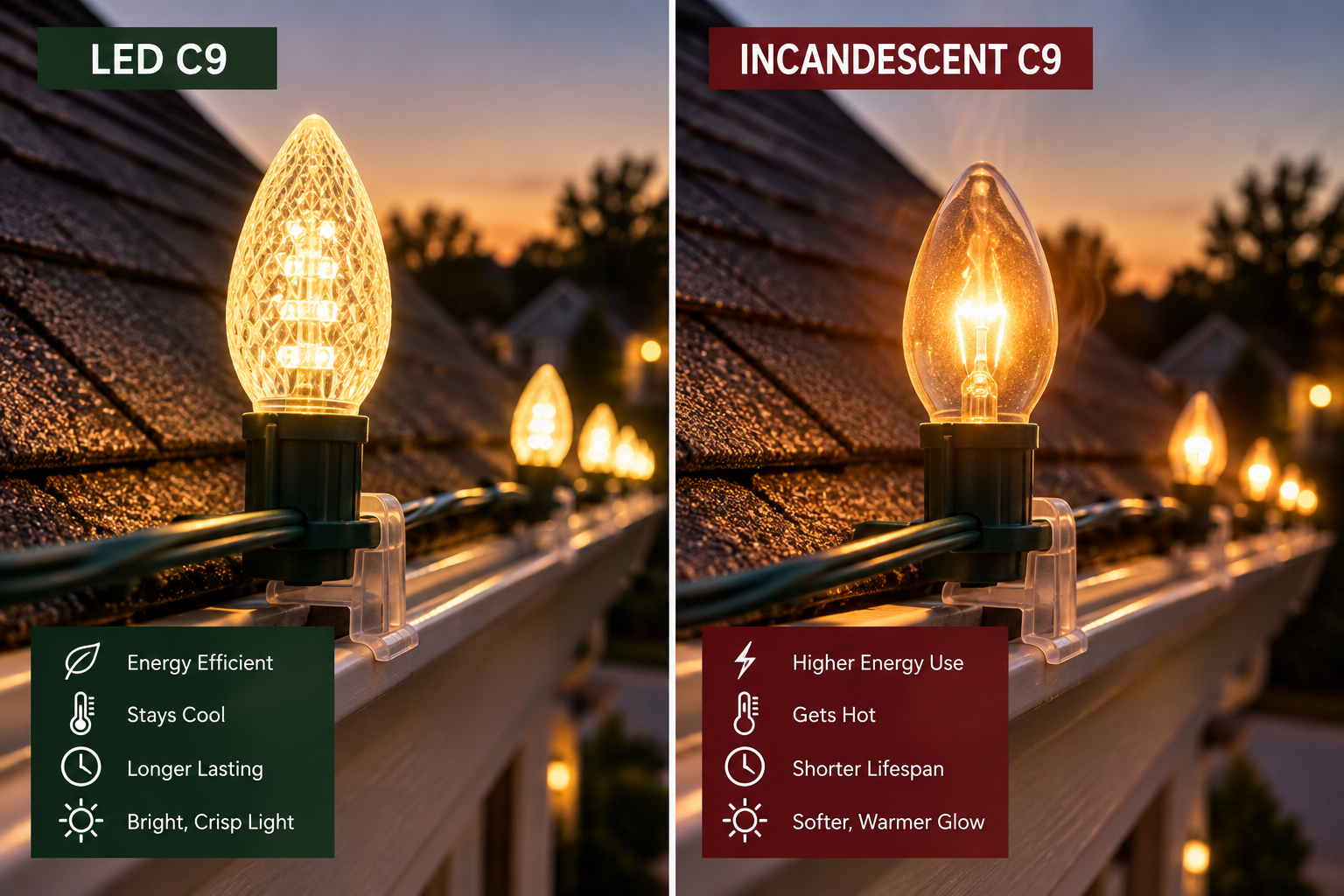
- LED: cool to the touch, low energy use, long bulb life, consistent brightness
- Incandescent: generates heat, higher energy use, shorter bulb life, gradual dimming over time
- LED: better weather durability and more compatible with dimmable or smart systems
- Incandescent: usually cheaper upfront, but that gap narrows over multiple seasons
Why This Isn't Really a Close Call Anymore
A few years ago, incandescent had a warmer, more traditional glow that LED struggled to match. LED color quality has closed that gap enough that the visual difference isn't the deciding factor it used to be. What's left is mostly practical: heat, energy use, lifespan, and durability, and LED wins most of those comparisons clearly.
That's part of why we use LED exclusively for custom-fit roofline and tree lighting. It holds up better through a full six-week season of Tennessee weather, and it doesn't need the same kind of yearly bulb-by-bulb troubleshooting that an aging incandescent strand does.
It's also simply less to worry about once a display is up. Fewer failures mid-season means fewer calls, fewer ladder trips, and a display that looks the same in week six as it did on day one.
If you're deciding between LED vs. incandescent Christmas lights for your own home, and you're not sure which fits your specific display, a free on-site quote is a good place to talk through what you're picturing and what would actually hold up best.
Frequently Asked Questions
Is LED actually brighter than incandescent?
Brightness is comparable for equivalent bulb counts, but LED tends to maintain that brightness more consistently over its lifespan than incandescent does.
Are incandescent lights a fire risk?
They generate more heat than LED, which is a real consideration around dry greenery or enclosed spaces, though proper use and maintained equipment reduce that risk considerably.
Do LED lights actually save money over time?
For most displays run over several weeks each season, the lower energy use and longer lifespan of LED tend to offset its higher upfront cost over multiple years.
What do professional installers typically use?
LED is now the standard for most professional installations, including ours, due to its durability, energy use, and consistent performance through a full season.
Get a free, no-obligation on-site quote from our Collierville crew.