How Rain, Wind and Tennessee Winters Affect Outdoor Christmas Lights
Key Takeaways
- Winters in Collierville, TN bring more rain, wind and occasional ice than heavy snow, so outdoor Christmas lights need sealed connections and secure clips.
- Water reaching a plug or splice is the most common reason a holiday display trips a GFCI outlet and goes dark.
- Loose strands are the main cause of wind damage, which is why Christmas Lights Collierville custom-fits C9 roofline lighting to each roofline.
- Christmas Lights Collierville backs its installs with a 24-hour repair guarantee and handles January takedown and storage.
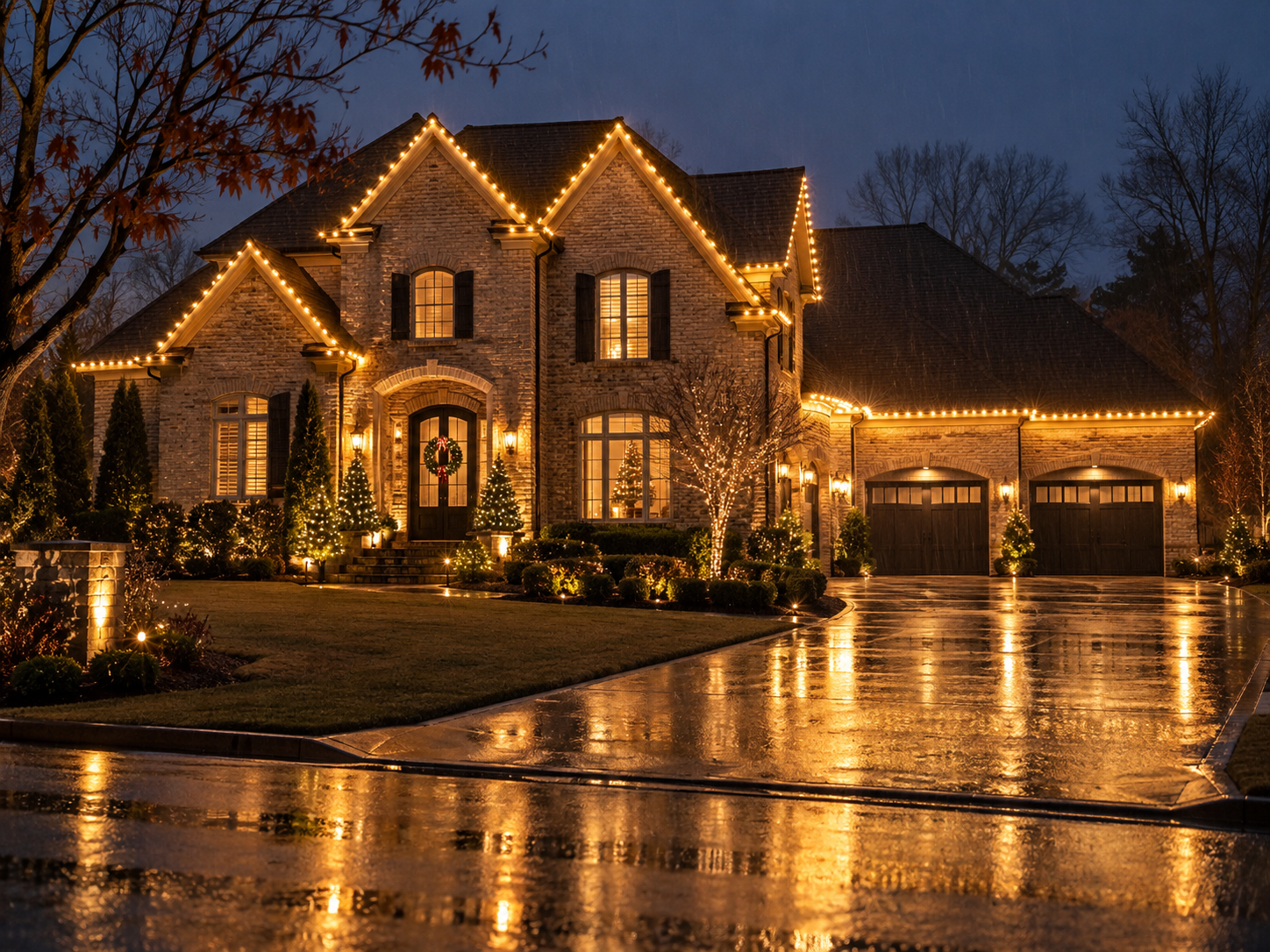
People picture Christmas lights fighting snow. Around here, that's rarely the problem. A Collierville winter is mostly cold rain, gusty fronts that blow through overnight, and every few years an ice storm that coats everything in a glaze.
Each of those hits a display differently. Rain goes after connections. Wind goes after anything loosely attached. Ice adds weight and makes every gutter slick. We install outdoor Christmas lights with all three in mind, and here's what that looks like in practice.
Rain Is the Real Test
Most of the service calls we see in December trace back to water. Not the bulbs, the connections. A plug that sits in a puddle on the porch, a splice resting in a gutter, or an extension cord laid across the lawn will eventually get wet enough to cause trouble.
When that happens, the GFCI outlet usually trips. That's the outlet doing its job. It shuts off power the moment it senses current going where it shouldn't, and on a wet night that's exactly what you want. The fix isn't to swap in a different outlet. It's to get the connections up and out of the water.
That's why we keep plugs off the ground, run power along the house instead of across the yard, and use outdoor-rated components from end to end. Indoor extension cords outside are one of the first things we pull when we look at a DIY setup.
Outlet location matters as well. An exterior outlet near a downspout or at the bottom of a slope sees more water than one tucked under an eave. When we plan a display, we look at where the power comes from before we decide where the lights go.
Wind: It's About How Lights Are Attached
Strong fronts move through the Mid-South all winter, and they don't care how pretty your roofline looks. A strand that's draped instead of clipped will slap against the shingles, work itself loose, and eventually hang off the gutter.
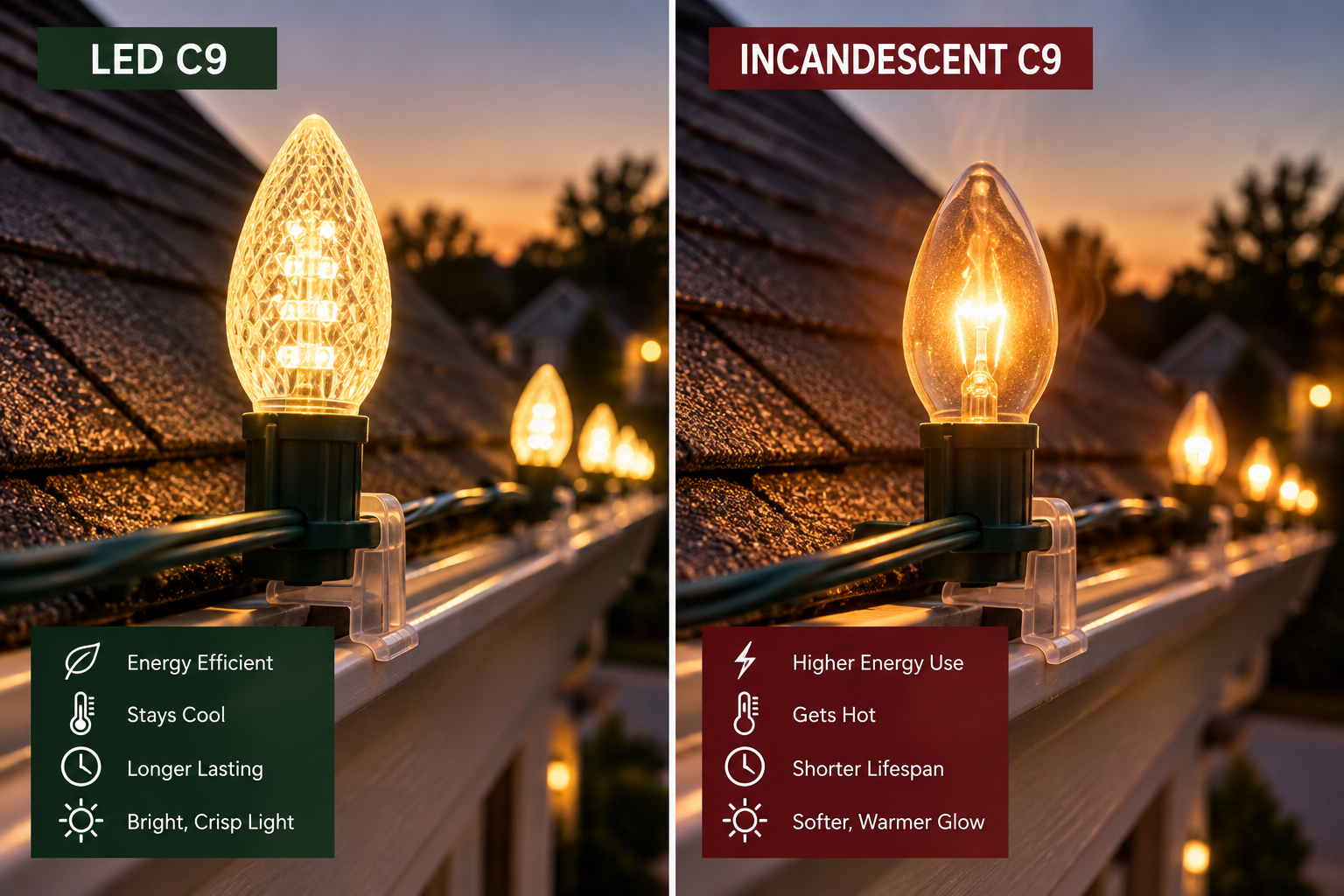
Custom-fit C9 roofline lighting holds up better here because there's no slack. Each run is cut to the length of that roofline, and every bulb sits in its own clip. Nothing to catch the wind.
Trees take wind differently. Branches flex, so we wrap trunks tight and run lights along the branches rather than tossing a net over the top. A net on a swaying tree slides around all season. A good wrap moves with the tree.
Ice Storms and Hard Freezes
Ice is the one that makes people nervous, and it's fair. A coat of ice adds real weight to anything hanging off a gutter, and nobody should be on a ladder until it melts.
LED lights handle the cold itself just fine. The concern is weight and attachment, which brings it back to clips and tight runs. Lights that sit flat against the roofline carry less ice than lights hanging in loops.
After an ice event, look from the ground. If a section is dark or a run is sagging, call us instead of climbing up. That's what the repair guarantee is for.
[IMAGE_1: Close-up of C9 bulbs secured in individual clips along a gutter line, showing why clipped lights shed wind and ice better than draped strands]
What Our Crews Check Before They Leave
Every install gets the same walk-through before the truck pulls away. Weather is behind almost every item on it:
- Every plug and connection sits off the ground and away from standing water
- Power runs along the structure, not across walkways or open lawn
- Each bulb is seated in a clip, with no loose loops on the roofline
- Tree wraps are tight enough to move with the branches in wind
- The whole system runs on outdoor-rated cords and components
- Everything is tested lit before we leave the property
None of that is glamorous. It's the reason a display makes it through December without a dark section on Christmas Eve.
When Something Goes Out Anyway
Even a careful install sees weather we can't control. A limb comes down, a bad storm rolls through, a bulb gets knocked loose. It happens.
When it does, our 24-hour repair guarantee kicks in. You call, we come back and fix it. You don't have to figure out which connection got wet or climb onto a slick roof to find out.
Weather Affects Install Day Too
Rain doesn't just matter once the lights are up. It shapes the whole install calendar. Our crews don't work on wet or icy roofs, period, so a rainy week in late November pushes every scheduled house back a day or two.
That matters most right before Thanksgiving, when everyone wants their lights on for the long weekend. A stretch of bad weather that week can stack up appointments fast. Booking in October or early November gives you some cushion, because a rain delay on an early date still leaves plenty of time before the holiday.
It's also why we'd rather install on a dry, mild fall afternoon than squeeze a house in during a cold drizzle. Clips seat better, roofs are safer, and nobody's rushing.
Don't Leave Them Up Into Spring
The longer lights stay outside, the more weather they absorb. A display that goes through January rains, February freezes and spring storms starts the next season already worn.
That's a big part of why we do January takedown and storage. We take everything down, pack it, and store it dry until next year. When it goes back up, it's coming out of storage instead of out of the garage rafters after a summer in the heat.
Ready for a Display That Handles Our Winters?
If you want outdoor Christmas lights installed with Collierville weather in mind, we'll come out, look at your house, and put together a free on-site quote. We'll point out anything about the property that matters for rain and wind while we're there.
Frequently Asked Questions
Is it safe to leave Christmas lights on in the rain?
Yes, when the system uses outdoor-rated components and every connection sits off the ground and away from standing water. If a GFCI outlet trips during rain, it means water reached a connection, and that connection needs to be moved or sealed rather than bypassed.
Why do my Christmas lights keep tripping the outlet when it rains?
A GFCI outlet trips when it senses current leaking, which usually means a plug, splice or extension cord is sitting in water. Lifting connections off the ground and running power along the house usually solves it.
Do cold temperatures hurt LED Christmas lights?
LED lights handle cold weather well. In Collierville, the bigger risks are wind loosening strands and ice adding weight, which is why secure clips and tight runs matter more than the bulbs themselves.
What happens if a storm damages my display?
Every Christmas Lights Collierville install comes with a 24-hour repair guarantee. Call us and we'll come back to fix damaged or dark sections so you don't have to get on the roof yourself.
Get a free, no-obligation on-site quote from our Collierville crew.