How Long Does Light Installation Take in Collierville?
Key Takeaways
- How long does light installation take for a typical Collierville home depends mainly on roofline length, home height, and how many trees or shrubs are being wrapped.
- A straightforward single-story roofline with no trees is generally the fastest job on the calendar.
- A two-story home with a longer roofline and several mature trees to wrap takes considerably more time than a simple ranch.
- Weather and access, like ladder placement around landscaping, can add time beyond what the roofline and tree count alone would suggest.
- Booking earlier in the season gives a crew more time to work at a normal pace rather than compressing the job into a rushed visit.
"How long is this going to take?" comes up on nearly every quote call, usually right after someone realizes there's a crew involved rather than just a box of lights showing up. The honest answer is: it depends more than people expect, but there's a real pattern to it, and knowing the pattern makes it a lot easier to plan around.
What Actually Determines the Time
Roofline Length and Height
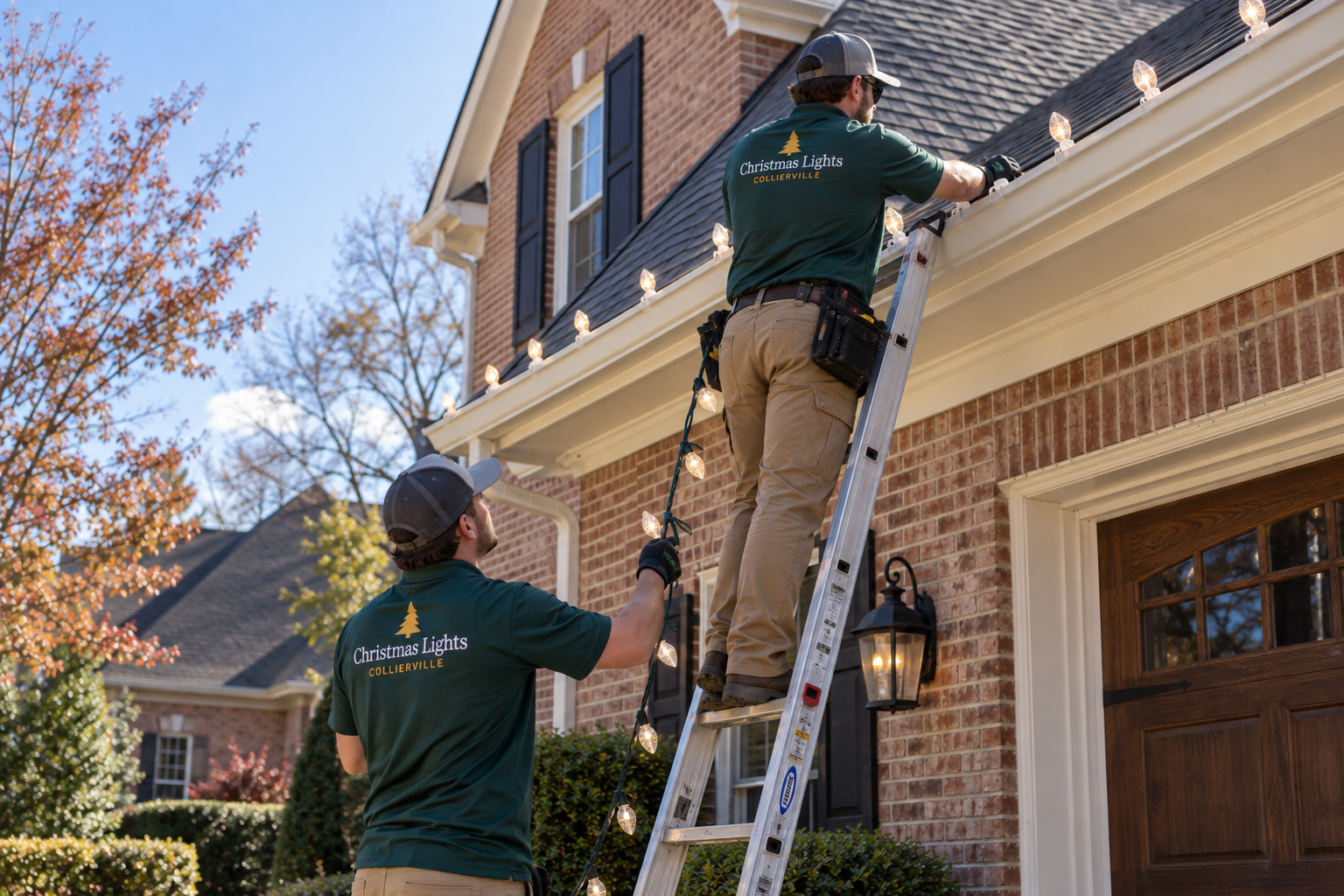
The single biggest factor is how much roofline there is and how hard it is to reach. A shorter, single-story roofline goes faster than a longer, two-story one, both because there's more linear footage to cover and because working at height simply takes more care.
Number of Trees and Shrubs
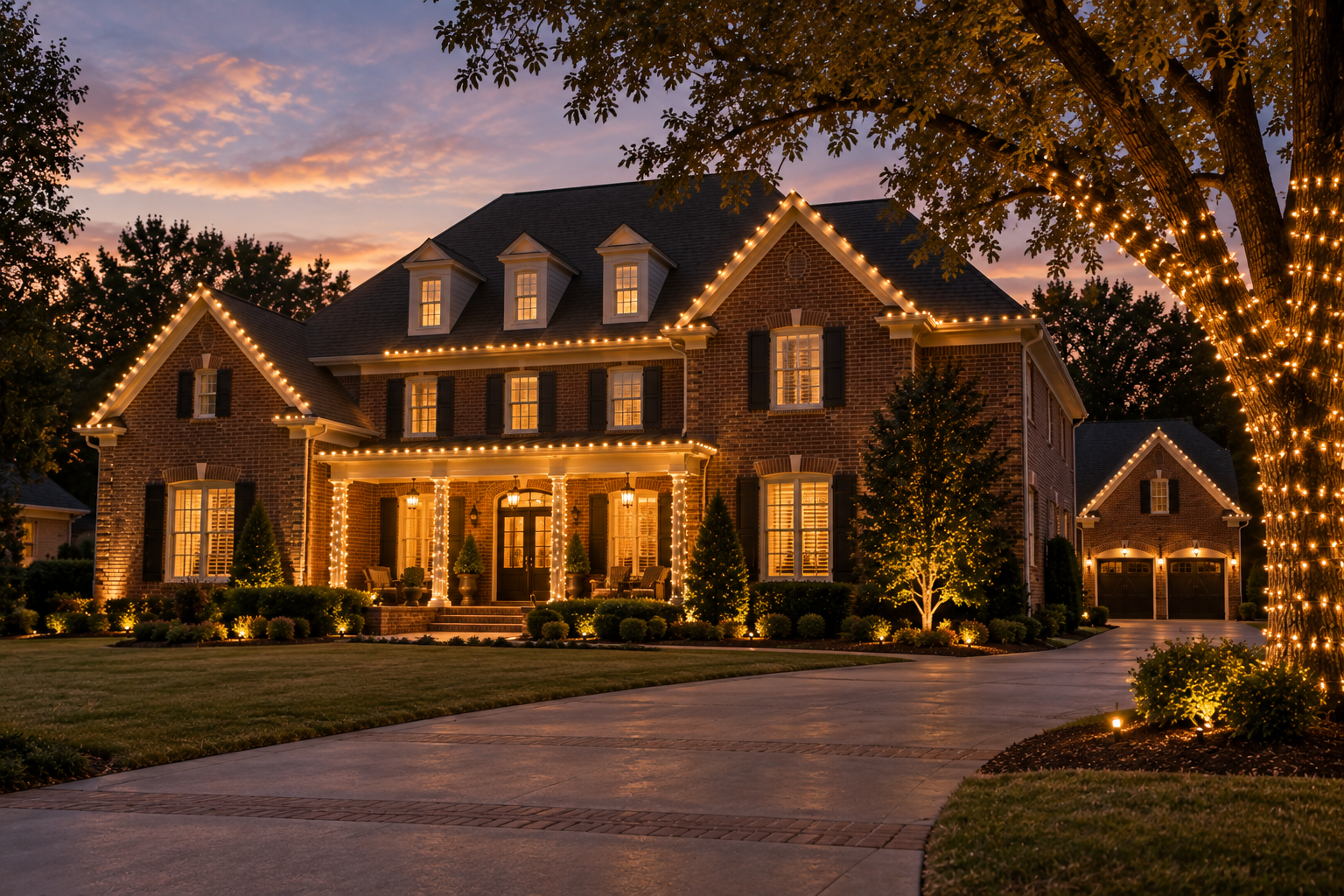
Tree and shrub wrapping adds real time on top of roofline work, and it scales with the size and number of trees involved. A single small ornamental tree adds relatively little. A mature oak with a wide canopy takes considerably longer, since the wrap needs to follow actual branch structure rather than just circling the trunk a few times.
Design Complexity
A single warm-white run along the roofline is the fastest design to execute. Multi-color patterns, symmetric matching across a wide facade, or several distinct treatment zones, roofline plus columns plus multiple trees, all add time even though the materials themselves aren't dramatically different.
Access and Property Layout
Steep terrain, limited ladder access, tight landscaping near the roofline, or long distances between features on a large lot all affect how quickly a crew can move. None of this shows up until someone actually walks the property, which is part of why timing estimates get more accurate after an on-site quote.
Weather on Installation Day
Wind, rain, or ice can slow down or pause work entirely, since safely working from a ladder depends on conditions being reasonable. A day that starts dry and turns wet partway through can extend a job that would otherwise have wrapped up on schedule. This is one of the few factors that has nothing to do with your house and everything to do with the calendar you happen to land on.
General Ranges to Expect
A simple single-story home with a short, uncomplicated roofline and no trees is typically the quickest job on any given day. A larger two-story home with a longer roofline, several mature trees to wrap, and a more detailed design takes meaningfully longer, sometimes stretching into the better part of a day rather than a couple of hours. Commercial and HOA properties, given their larger scope, are their own category entirely and are usually planned across multiple visits rather than a single day.
These are general patterns, not guarantees for any specific property. The only way to get an accurate estimate for your own home is a walkthrough that accounts for your actual roofline, trees, and access.
What Affects Your Specific Timeline
- Total roofline length and how many stories the lighting needs to reach
- Number and size of trees or shrubs being wrapped
- How detailed or symmetric the design needs to be
- Property access, including landscaping or terrain near the roofline
- Weather conditions on the scheduled installation day
Installation Time vs. Booking Lead Time
It's worth separating two different questions here. How long does light installation take once a crew is actually on-site is one thing. How far in advance you need to book to get your preferred date is a separate question entirely, and it matters just as much. Even a quick, simple installation can be hard to schedule if you're calling in mid-December, when the calendar is already full of longer, more complex jobs booked weeks earlier.
Booking in October or early November means your installation happens at a normal, unhurried pace, with time for the crew to do the kind of careful, custom-fit work that a rushed December slot doesn't always allow. It also means more flexibility if weather pushes your date back a day or two, since there's still runway left before the season's true crunch begins.
If you want a real answer for your specific home, not just a general range, a free on-site quote is the way to get one. We'll walk your roofline and trees, account for your property's actual layout, and give you a realistic timeline before anything gets scheduled.
Frequently Asked Questions
How long does light installation take for an average single-story home?
A straightforward single-story roofline with no trees is generally the fastest job on the schedule, though the exact time depends on roofline length and design complexity.
Does tree wrapping add significant time to an installation?
Yes, especially for larger, mature trees, since wrapping follows the tree's actual branch structure rather than just circling the trunk.
Can weather delay an installation that's already scheduled?
Yes. Wind, rain, or ice can pause or slow work, since ladder work depends on reasonably safe conditions.
Should I book earlier if I want a faster, less rushed installation?
Yes. Booking in October or early November gives a crew more time to work at a normal pace rather than compressing the job into a tight December slot.
Get a free, no-obligation on-site quote from our Collierville crew.