10 Christmas Light Installation Mistakes Collierville Homeowners Make
Key Takeaways
- The most common Christmas light installation mistakes are overloaded outlets, gutter-draped lights instead of roofline mounting, and loose tree wraps.
- Mixing incompatible bulb types or leaving damaged sections unrepaired are two of the fastest ways a display looks unfinished by January.
- Waiting until December to book installation is itself one of the most common mistakes homeowners make each year.
- A dusk-to-dawn timer prevents both wasted electricity and premature bulb wear from lights left on around the clock.
- Custom-fit roofline mounting, rather than draping lights over gutters, is what keeps a display looking clean through the whole season.
We get called every January to fix the same handful of problems. Almost all of them trace back to one of these ten Christmas light installation mistakes, and almost all of them are avoidable if you catch them early.
1. Draping Lights Over the Gutter Instead of the Roofline
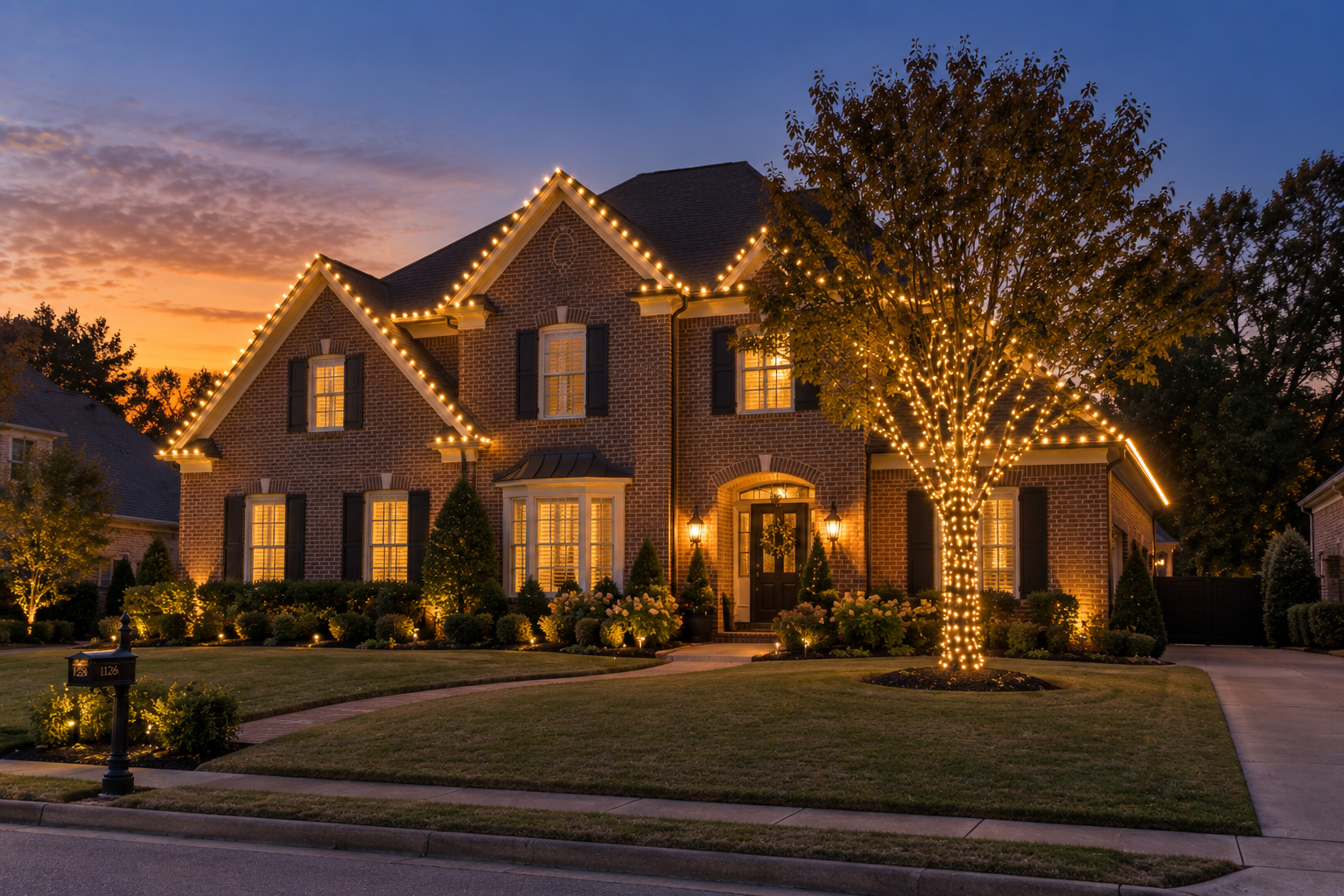
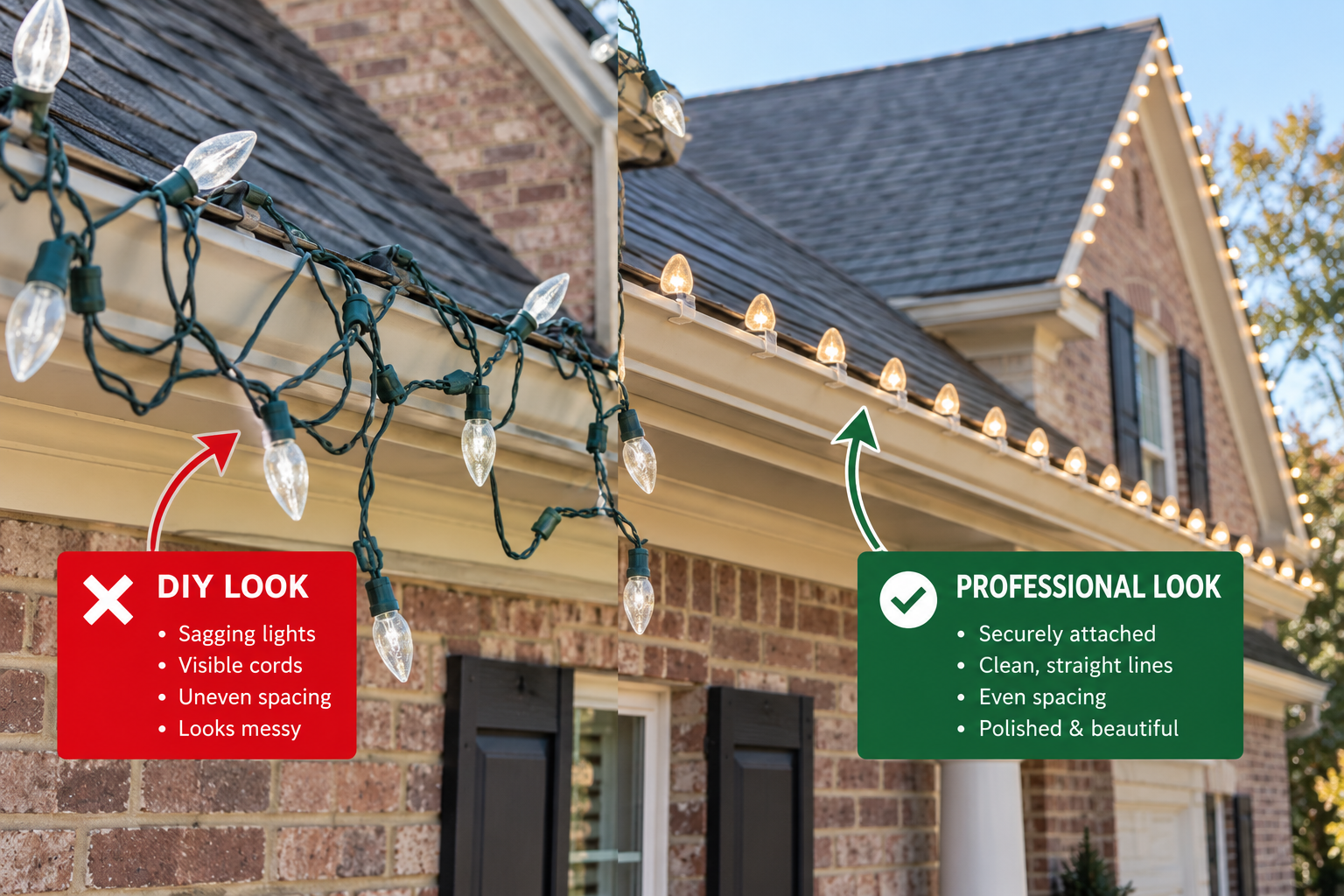
This is the single most common shortcut we see. Hooking lights over a gutter is fast, but gutters sag under the extra weight, and the lights end up crooked within a couple of weeks. It's a mistake that's invisible on install day and obvious two weeks later, which is exactly what makes it so common. Custom-fit mounting clips the lights to the actual roofline, which holds its shape all season instead of drifting further out of line every time the wind picks up.
2. Overloading a Single Outlet
Plugging multiple long runs of lights into one extension cord, then that cord into one outlet, is a fast way to trip a breaker or, worse, overheat a cord. Circuits have real limits, and a full roofline display usually needs more than one.
3. Mixing Incompatible Bulb Types
Combining old incandescent strings with newer LED sets on the same run can cause uneven brightness and, in some cases, wiring problems since the two draw power differently. It's an easy trap to fall into when a box from last year is missing a section and the nearest replacement in the garage happens to be a different type. It's worth replacing an entire run rather than patching it with whatever's left over, even if that means buying more lights than you expected to.
4. Skipping Weatherproof Connections
Any place two light strings connect outdoors needs a connection that can handle rain, not just a plug pushed together and left exposed. Water in an unprotected connection is one of the most common reasons a section goes dark mid-season.
5. Wrapping Trees Too Loosely
A loosely wrapped tree looks fine from the driveway on day one and sloppy by week two, once wind and weather loosen it further. Trunk and limb wrapping needs to be secured tightly enough to hold its shape through Collierville's winter wind and rain.
6. Working Alone at Height
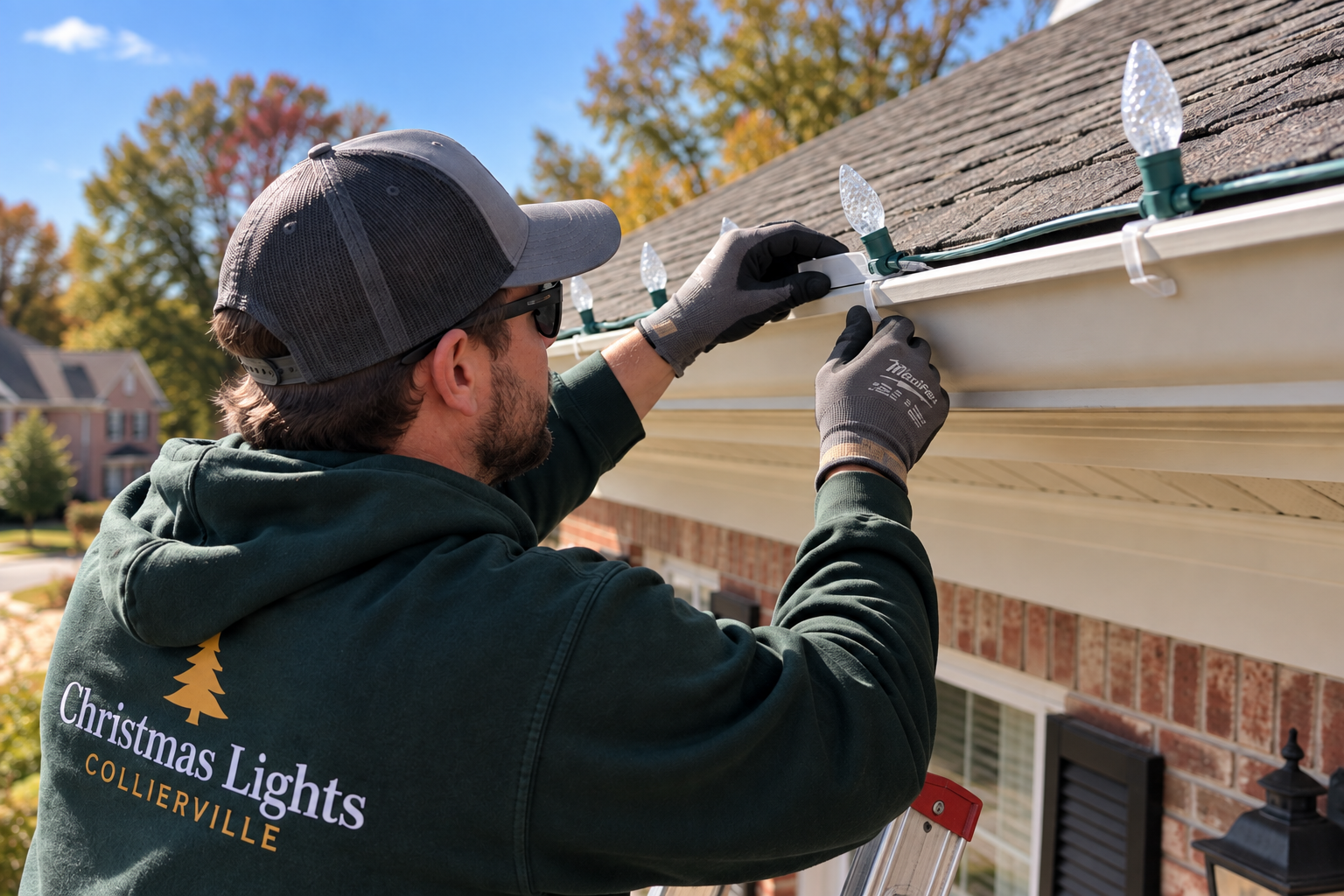
Two-story rooflines and tall trees are not a one-person, one-ladder job. Working alone at height with an armful of lights, on a cold morning, on a roof you don't climb every day, is how most holiday lighting injuries actually happen. A second person holding the ladder and passing up sections makes the whole job faster and considerably safer, which is part of why professional crews never send someone up alone.
7. No Plan for a Section Going Out
Every display eventually has a bulb or section fail. Homeowners without a repair plan either leave it dark for the rest of the season or climb back up a ladder in December weather to fix it themselves. A 24-hour repair guarantee exists specifically for this.
8. Leaving Lights On Around the Clock
Running a full display all night, every night, adds unnecessary wear to bulbs and connections, on top of the extra electricity. A simple dusk-to-dawn timer solves this without anyone having to remember to flip a switch.
9. Booking Too Late in the Season
This one isn't about the lights themselves, it's about timing, and it's one of the Christmas light installation mistakes that has nothing to do with the actual installation and everything to do with the calendar. Waiting until December to book means a shrinking set of available dates and less time for a crew to do a careful, custom-fit job instead of a rushed one. October and early November are when the calendar still has real flexibility.
10. Not Measuring the Roofline First
Buying lights based on a guess at roofline length almost always means too much slack bunched in one spot or not enough to finish a run. Measuring first, then buying or cutting to fit, is what makes a display look intentional instead of improvised.
The Pattern Behind Most of These
Notice that most of these mistakes come down to the same root cause: rushing. Rushed installs skip measurements. Rushed connections skip weatherproofing. Rushed schedules skip the ladder safety that two people and the right equipment would otherwise handle. Slowing down, or handing the job to a crew that already has the process down, fixes most of this list at once.
None of these mistakes are about effort or good intentions. Plenty of careful homeowners still end up with a sagging gutter run or an overloaded outlet simply because the job has more moving parts than it looks like from the ground. That's not a knock on anyone's DIY skills, it's just what happens when a roofline, a tree, and an extension cord all meet in late November with a deadline attached.
Quick Checklist Before You Start
- Measure your roofline and count trees before buying anything
- Use one dedicated circuit per major run of lights
- Check every outdoor connection for weatherproofing
- Set a timer instead of leaving lights on overnight
- Have a plan for what happens if a section goes dark
If your own list of yearly light problems overlaps with more than two or three of these, it might be worth handing the job to a crew that deals with them daily instead of troubleshooting your own roofline every December.
We offer free on-site quotes and handle custom-fit installation, tree wrapping, a 24-hour repair guarantee, and January takedown, so none of this list becomes your problem again.
Frequently Asked Questions
What's the single most common Christmas light installation mistake?
Draping lights over the gutter instead of mounting them to the actual roofline. It's fast, but it sags and looks uneven within weeks.
Is it actually dangerous to hang lights on a two-story roofline alone?
Yes. Working alone at height with an armful of lights is one of the more common causes of holiday lighting injuries, and it's avoidable with proper equipment and a second person.
Do timers really make a difference?
Yes, a dusk-to-dawn timer reduces both electricity use and unnecessary wear on bulbs and connections from lights left on all night.
What should I do if a section of my lights goes out mid-season?
Have a repair plan before it happens. A 24-hour repair guarantee means a dark section gets fixed quickly instead of staying out for the rest of the season.
Get a free, no-obligation on-site quote from our Collierville crew.